November 24, 2026
Warehouse and industrial floors must support constant movement from forklifts, pallet jacks, and other heavy equipment. Even small changes in concrete elevation can affect how these machines operate. Slab curling is one problem that can create uneven surfaces, increase equipment wear, and interrupt daily operations.
Understanding why concrete curls and how it affects commercial facilities can help property managers recognize problems before they become expensive. Professional commercial concrete leveling services can address certain uneven or unsupported slabs, helping businesses maintain safer and more efficient working environments.
Understanding What Causes Concrete Slab Curling
Slab curling occurs when the edges or corners of a concrete slab lift or warp because of differences in moisture or temperature between its upper and lower surfaces. As the top dries or cools differently from the bottom, uneven shrinkage or contraction can cause the concrete to bend upward.
According to the American Concrete Institute, upward curl at concrete slab corners is typically around 1/4 inch but can reach up to 1 inch due to differential moisture and temperature gradients.
Although these measurements may seem small, they can significantly affect facilities that depend on smooth surfaces for equipment movement. Forklifts repeatedly crossing raised joints may experience additional vibration and impact forces.
Concrete mix design, curing conditions, slab thickness, joint spacing, and environmental factors can influence the severity of curling. Identifying the underlying cause helps determine whether corrective work is necessary and which approach is appropriate.
Recognizing Slab Curling in Commercial Facilities
Slab curling frequently becomes noticeable near construction joints, saw-cut joints, and slab corners. These locations may develop slight elevation differences that become more pronounced as heavy equipment crosses them repeatedly.
Facility managers should watch for several warning signs:
- Uneven joints: Raised edges create abrupt changes in floor elevation.
- Surface cracks: Additional stress may contribute to cracking near affected sections.
- Equipment vibration: Forklifts may bounce or produce unusual noises when crossing joints.
- Joint deterioration: Repeated impacts can damage concrete edges and create loose debris.
- Operating difficulties: Drivers may need to reduce speed or avoid certain travel paths.
These symptoms do not automatically confirm curling. Settlement, subbase problems, and other concrete conditions can produce similar results. A professional inspection helps identify what is happening beneath and across the floor.
Examining How Slab Curling Damages Forklifts
Forklifts are designed to transport heavy materials across relatively even surfaces. When their wheels repeatedly encounter raised concrete edges, the resulting impacts can place additional stress on tires and mechanical components.
Increasing Tire and Component Wear
Forklift tires absorb much of the impact when equipment travels over uneven joints. Repeated jolts can contribute to premature tire wear and place additional strain on wheels, bearings, and other components.
These conditions can increase maintenance requirements and shorten replacement intervals. Over time, the combined expense of repairs and interrupted operations may become significant.
Creating Load Stability Concerns
Uneven flooring can also affect the stability of materials being transported. When a forklift crosses a raised joint, sudden movement may cause a load to shift or become less stable.
These risks deserve particular attention when operators transport heavy pallets, stacked materials, or products requiring careful handling. Maintaining stable travel surfaces supports safer movement throughout the facility.
Reducing Operational Efficiency
Operators may need to slow down when crossing damaged sections or choose alternate routes to avoid rough flooring. These adjustments can interrupt established traffic patterns and extend the time required to move inventory.
Commercial concrete leveling services may help address contributing floor conditions, allowing equipment to operate across smoother, more consistent travel paths when the underlying problem is suitable for leveling.
Understanding How Curling Damages Concrete Floors
Slab curling affects more than equipment. As concrete edges lift, portions of the slab may lose contact with the supporting material underneath. This condition can leave sections vulnerable to repeated loading and additional movement.
Developing Cracks and Joint Damage
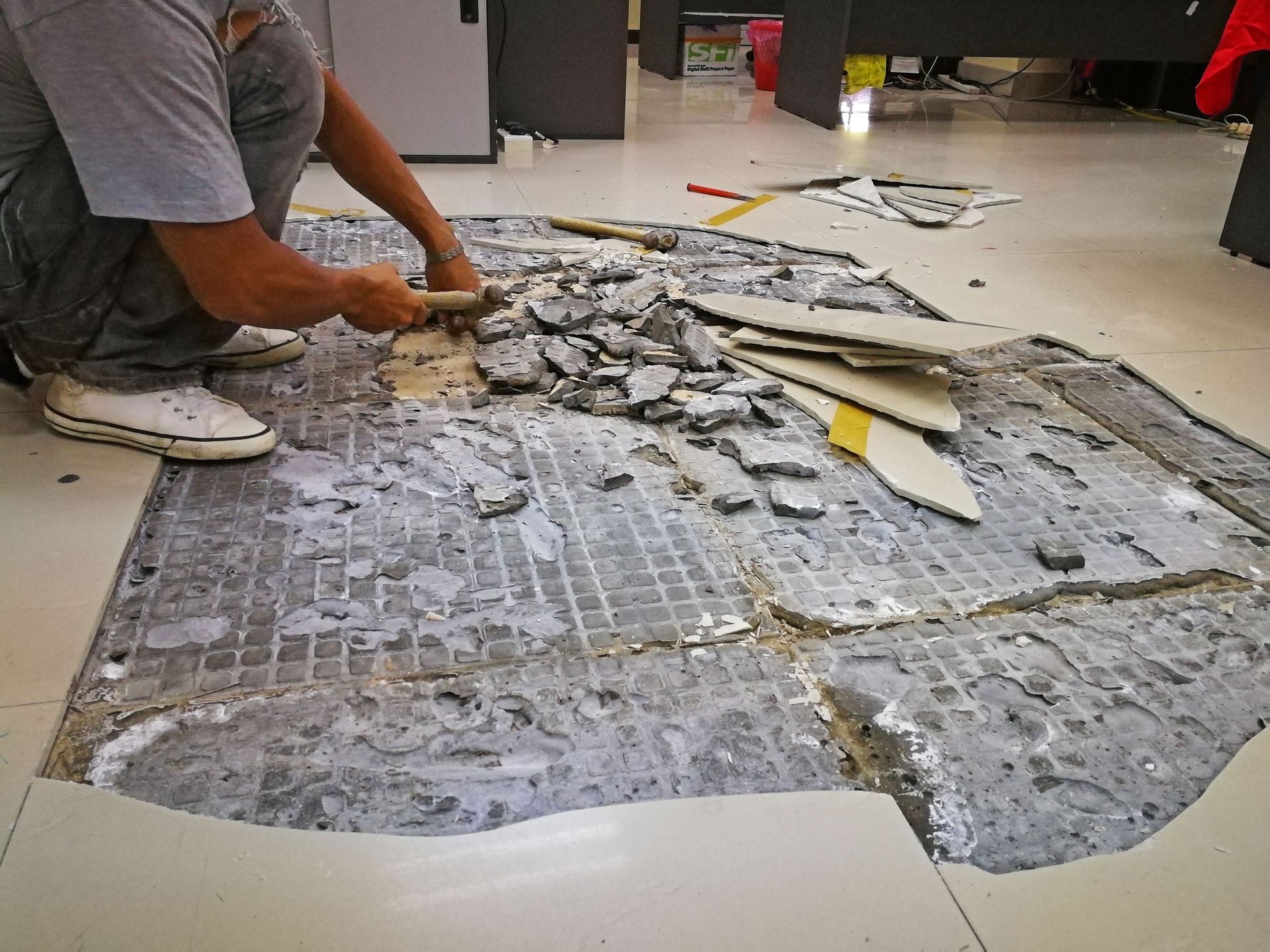
When forklifts cross unsupported or elevated slab edges, concentrated loads can contribute to cracking and deterioration. Repeated wheel impacts may cause corners to break or joints to chip.
Once damage develops, uneven transitions can become more severe. Small cracks may widen, and broken edges may create additional problems for equipment and pedestrians.
Accelerating Surface Deterioration
Heavy traffic over damaged joints can gradually remove concrete material and produce rougher surfaces. This deterioration can increase vibrations while creating additional maintenance needs.
Ignoring the problem may allow localized damage to spread, potentially requiring more extensive repairs than would have been necessary earlier.
Creating Additional Maintenance Expenses
Damaged concrete can affect operational budgets through floor repairs, equipment maintenance, and temporary work interruptions. Businesses may also need to redirect traffic or restrict access while affected areas are evaluated.
Timely assessment helps facility managers understand whether commercial concrete leveling services, joint repairs, or another corrective method may be appropriate.
Evaluating Concrete Curling and Settlement
One important distinction is that slab curling and concrete settlement are not identical problems. Curling involves distortion caused by moisture or temperature differences, while settlement generally occurs when the supporting soil or base moves or loses stability.
Because both conditions can produce uneven floors, proper diagnosis is essential. Simply raising a curled slab may not correct the curling itself and could create additional elevation differences.
Professional evaluation may include checking joint elevations, inspecting cracks, and identifying unsupported areas. If settlement or inadequate support contributes to the problem, stabilization or lifting may be appropriate. Curling caused primarily by slab deformation may require other corrective methods.
Understanding these differences helps businesses avoid unnecessary repairs and choose solutions based on actual conditions.
Exploring Commercial Concrete Repair Options
The appropriate repair depends on the extent of damage, structural conditions, and whether the concrete remains suitable for rehabilitation. Different facilities may require different approaches.
Stabilizing Unsupported Concrete
When voids or inadequate support are contributing to movement, specialized stabilization methods may help restore support beneath affected slabs. Polyurethane foam injection is one technique used for suitable settlement and support problems.
This approach can often be completed without removing large sections of existing concrete. However, its suitability depends on the cause and condition of the affected slab.
Correcting Uneven Floor Elevations
Commercial concrete leveling services can address certain elevation differences caused by settlement. The goal is to improve surface transitions while restoring appropriate support where needed.
Facilities experiencing true slab curling may require additional evaluation to determine whether joint treatment, grinding, replacement, or another repair method is more appropriate.
Repairing Damaged Concrete Joints
Chipped joints and cracked edges may need repairs after underlying movement or support problems are addressed. Restoring damaged sections can help improve floor continuity and reduce repeated impacts from rolling equipment.
Combining appropriate stabilization with targeted repairs may extend the useful life of existing concrete when conditions allow.
Preventing Further Floor and Equipment Damage
Preventive maintenance can help facilities identify developing concrete problems before they disrupt operations. Regular inspections should focus on high-traffic aisles, loading docks, storage areas, and locations where forklifts frequently cross joints.
Encourage equipment operators to report unusual vibrations, changing floor conditions, or damaged concrete. Keeping records of recurring trouble spots can help maintenance teams identify areas requiring professional attention.
Facility managers should also consider drainage, moisture conditions, and the condition of the supporting base. While maintenance cannot eliminate every cause of slab curling, identifying contributing problems early can limit additional deterioration.
When planning repairs, coordinate work around production schedules and equipment access. This approach can help minimize interruptions while maintaining workplace safety.
Protecting Your Facility With Concrete Lifters
Uneven commercial floors can affect equipment performance, worker safety, maintenance expenses, and overall productivity. Understanding slab curling and distinguishing it from settlement helps facility managers choose repairs that address the actual source of the problem.
Concrete Lifters provides commercial concrete leveling services throughout North Carolina and South Carolina. Our family-owned company specializes in concrete lifting, joint stabilization, warehouse floor leveling, industrial concrete repair, and related stabilization services. With more than 20 years of experience, certified installers, flexible scheduling, and a 10-year warranty on most services, we focus on restoring functional concrete surfaces while minimizing operational disruptions.
If your facility has uneven joints, unsupported slabs, or concrete settlement affecting forklift traffic, contact Concrete Lifters for a free inspection and consultation. Our team can assess the condition of your floors, explain appropriate repair options, and determine whether our commercial concrete leveling services can help restore stability and improve daily operations.